
|
Reducing Poverty in Bangladesh: A Secondary Analysis
Md. Reazul Islam1,*,Shamim Ahmed2 and Ahsanul Haque Rifat3
1Assistant Professor, Department of Sociology, Jatiya Kabi Kazi Nazrul Islam University, Trishal, Mymensingh-2224, Bangladesh. 2Associate Professor, Department of Anthropology, University of Rajshahi, Rajshahi 6205 3MSS Student, Department of Sociology, Jatiya Kabi Kazi Nazrul Islam University, Trishal, Mymensingh-2224, Bangladesh. |
|
Keywords |
|
Abstract |
|
Poverty Reduction, Social Safety Nets, Development Policies, Distribution, Bangladesh. |
|
Poverty continues to be a barrier to progress in Bangladesh as 20.5 % of the population still resides below the poverty line. While there have been advancements in many development spheres over the last decade, regional gaps, socioeconomic disparities, and structural hurdles remain prevalent. This study utilizes institutional theory to investigate the influence of factors, governance frameworks, and specific interventions on poverty levels in the country. The study reveals poverty alleviation programs, like poverty reduction initiatives, microfinance projects, and cash transfer schemes by analysing information, from government reports and academic sources as well as survey data sources. From 2010 to 2019 in Bangladesh, there was a decline in poverty rates from 31.5% to 20.5%. This improvement is credited to growth and effective government projects such as the Vulnerable Group Development (VGD) program, investments in rural infrastructure, and other initiatives. However, challenges remain in addressing the demands of marginalized communities especially, in rural regions. Effects of climate change, lack of healthcare access, and educational inequalities still impede advancements. This study highlights the significance of institutional inclusivity, participatory governance, and equitable resource distribution in achieving sustainable poverty reduction. It suggests that poverty is a problem that needs changes in systems, strong social safety net policies, and community-led initiatives. By connecting theories with real-world experiences this study aims to contribute to the global conversation on reducing poverty. In addition, this study provides pivotal recommendations for policymakers to establish structures that tackle underlying disparities and empower communities, with Sustainable Development Goals (SDGs) in Bangladesh. |
Introduction
Bangladesh, a South Asian country located in the Bay of Bengal, is home to over 165 million
people, many of whom live in extreme poverty and lack access to essential services. The country
is highly vulnerable to natural disasters such as floods, cyclones, and droughts due to its
geographical location and low-lying deltaic terrain (Deka, 2023; Ahmad, 2022). Facing various
challenges such as low access to reliable and affordable power, poor infrastructure, limited
availability of serviced land, uncertain and complex business regulations, rapid urbanization,
vulnerability to climate change and natural around 22 million people still live below the poverty
line, and the recent pandemic (COVID-19) has pushed an additional 71-100 million people into
extreme poverty, giving rise to the “new poor” disasters (United States Institute of Peace, 2021;
Maloney, 1985). The country's largest industries are garments and textiles, but it is also rapidly
diversifying into technology. Bangladesh's investment in 16 special economic zones with
ambitions to build 100 more promotes jobs and economic growth while also providing chances
for new businesses and the development of service industries. International assistance from
organizations such as the World Bank and the IDA (International Development Association) has
been critical to Bangladesh's economic recovery, with grants and interest-free financing totalling
over $28 billion (Word Bank, 2018).
Bangladesh, as a developing country and a progressive nation, has made notable progress, yet
fighting against many pivotal challenges like poverty, which is not fully solved. According to the
World Bank, due to the loss of purchasing power, about 5 lakh people in Bangladesh probably
fell into extreme poverty between the fiscal years 2022-23 and 2023-2024 (The Daily Star, 2024).
The poverty in Bangladesh is the result of decades of exploitation, colonization, and war, resulting
in a cycle of poverty and deprivation that has been difficult to break out of. Additionally, the
Bangladeshi people are uneducated, technologically inferior, and have limited natural resources.
So, poverty is a regular and daily occurrence here. Poverty refers to material deprivation and can
involve economic hardship, lack of basic consumer items, education, or access to healthcare.
Poverty is seen as a deficiency in resources that hampers participation in meaningful events and
relationships. It has detrimental effects on cognitive, socio-emotional, and physical health
outcomes, especially in children (Rodriguez, 2023). Poverty is assessed through multidimensional
factors like access to clean water, electricity, education, and child mortality rates (Roy, 2022). The
country has made remarkable progress in reducing poverty, supported by sustained economic
growth and various development initiatives. Its economic transformation from a primarily
agrarian economy to a booming industrialized one is remarkable. Poverty in Bangladesh is a
complex issue that requires a multidimensional approach to address the various vulnerabilities
faced by different groups, beyond income (UNDP, 2023). While Bangladesh has seen a reduction
in extreme poverty and improvements in living conditions, challenges such as constrained
liquidity within the banking system and deepening vulnerabilities in the banking sector persist,
indicating the need for sustained structural reforms to sustain growth and poverty reduction
(World Bank, 2023). Factors such as increasing life expectancy, rising literacy rates and fixed
population growth rates have contributed to the reduction of poverty over the years (Ali & Faisal,
2022). Besides, success in reducing poverty can be attributed to some other factors such as
investing in public services, implementing special economic zones, and receiving crucial support
from international organizations like the World Bank and the International Development
Association (Fritzjunker, 2019).
Moreover, Bangladesh has seen tremendous progress in recent years with addressing the causes
and impacts of poverty can aid in selecting effective tactics and processes. Bangladesh's
government has implemented policies and programs that have decreased poverty levels, improved
healthcare and education, and increased access to essential services. These efforts have led to
consistent declines in poverty, particularly in rural areas, and progress towards sustainable
development. Despite these achievements, the share of the underprivileged remained alarmingly
high at roughly 25% of the population in 2005, indicating the need for continued efforts towards
poverty reduction. Projections suggest that poverty decreased from 58.8 percent in 1991/92 to
48.9 percent in 2000 and then decreased to 40.9 percent, with the squared poverty gap ratio
decreasing from 6 (Ferdousi & Dehai, 2014; BRAC, 2009). In addition, in Bangladesh, 18.7% of
the population lived below the national poverty line in 2022. The extreme poverty rate in
Bangladesh has increased in the last three consecutive fiscal years (FYs), and the current fiscal
year (FY 2024-25) is expected to reach 7.0 percent, according to the latest World Bank report
(Financial Express, 2024; Ralph, 2024).
However, the goal of this study is to explore the scenarios of poverty in Bangladesh, analyze the
initiatives of existing government institutions, and provide efficient steps to address these
challenges. By adopting a secondary analysis method, this study integrates data from various
sources to reveal the interpretation of economic, social, and institutional factors in poverty
alleviation. It also emphasizes the importance of inclusive administration, equitable resource
distribution, and sustainable practices in achieving long-term development goals. Through these
lenses, the study contributes to a wide discourse on poverty reduction and sustainable
development in Bangladesh and other developing countries.
Objectives of the Study
Review of Literature
Bangladesh faced continuous poverty related complexities, despite the significant economic and
infrastructure growth. An estimated 21.5% or 36 million people lived under the poverty line in a
country of 163 million people, where 19% were extremely poor (Imam et al, 2018). This rate in
2024, more than 31.7 million people live in poverty, besides, more than 41million Bangladeshi
lived in extreme poverty, 83.7 per cent of the poor live-in villages, and the total population rise at
169.8 million (Prothom Alo, 2024). Understanding the dynamics of poverty reduction initiatives
and identifying effective techniques are important for sustainable development. A review of this
literature examines existing studies on poverty in Bangladesh, focusing on the initiatives taken
by the government and the possible ways to further reduce.
Bangladesh has made considerable progress in reducing poverty over the past few decades.
However, the rate of poverty reduction has varied across regions, society, and demographics.
Banks (2012) found that rural areas in Bangladesh tend to experience higher poverty rates
compared to urban areas due to disparities in access to resources and opportunities. In addition,
Siddique (1998) identified in his study that the vulnerability of certain groups, such as women
and minorities, worsens the challenge of poverty alleviation. The primary problem worldwide is
eliminating or regulating economic inequality, which develops from the income gap,
expenditures, capital, or resources. Bangladeshi household data indicate that the allocation of
income is far more uneven than the expenditure pattern. In Bangladesh, the top 5% of income
earners control 95% of total income, indicating an unequal distribution of wealth. This disparity
between the rich and poor significantly impacts society, as those with more wealth are better able
to access resources such as healthcare, education, and housing. This resource inequality
contributes to a cycle of poverty and deprivation, as those with fewer resources are less likely to
break out of the cycle (Chowdhury & Hossain, 2018). According to World Ultra Wealth-X,
Bangladesh is the world's fastest-rising country, with an increasing number of wealthy people.
The number of ultra-high net worth (UHNW) individuals in Bangladesh increased by 17.3%,
while it increased by 8.1% in the United (The Daily Star, 2018).
This rapid rise in wealth in Bangladesh is attributed to the country's burgeoning economy and the
development of its service industry. A study named "Extreme Poverty: The Challenges of
Inclusion in Bangladesh", conducted by BIDS and Bath University, analysed data up to 2019,
prior to the COVID-19 pandemic, and revealed that Mymensingh division has the highest rate of
MPI poverty with 37.90%, while Dhaka division ranks first with 20.47%. According to the MPI,
the study also highlights a rural-urban divide, with 28.99% of people in rural areas and 14.13%
in urban areas living in poverty. Additionally, the report shows that Christians in Bangladesh have
the highest poverty rate (30%), and Hindus have the lowest (20.89%) (Ali et al, 2021). This survey
highlights the inequality that exists in Bangladesh when it comes to poverty. The data collected
in this survey highlights the need for further investigation and policy intervention to address
poverty in Bangladesh, especially given the disparities between rural and urban areas and between
religious denominations. Poverty decreased dramatically between 2010 and 2016, but this trend
has also halted recently.
Bangladesh faces significant challenges due to its harsh natural and climatic conditions and
inadequate economic and social infrastructure. Despite these obstacles, the country has made
remarkable progress in improving its economic and social development, particularly in poverty
reduction and achieving the Millennium Development Goals (MDGs). Recent estimates from the
Bangladesh Bureau of Statistics (BBS) show a decline in poverty rates, with 20.5% of the
population living below the poverty line and 10.5% in extreme poverty as of the 2018-19 fiscal
year. The extreme poverty rate fell from 11.3% to 10.5% during the same period. The entire
population of the nation is 167.56 million as of FY20. 49.43 million of them are now
impoverished (The Financial Express, 2019). Despite the rapid economic growth over the last
decade, Bangladesh has seen only modest progress in poverty reduction. This unevenness has
been mainly attributed to rising wage inequality, access to education and health care, and gender
based disparities in access to economic opportunities (Planning Commission, 2012). Education,
savings, assets, international remittance, non-farm employment, safety net transfers, women's
empowerment, rural infrastructure development, and improved market access are identified as
key factors in breaking chronic and transient poverty in rural Bangladesh (Ahmed & Tauseef,
2022). Social protection initiatives, including government-funded cash handouts, medical
coverage, and food stamps, have been successful in reducing poverty in rural Bangladesh
(Chowdhury, 2023).
Moreover, Bangladesh has seen significant gaps between the rich and the poor, with the wealthy
benefiting from economic growth while the poorest are left behind. Bangladesh faces significant
challenges due to its harsh natural and climatic conditions and inadequate economic and social
infrastructure. Despite these obstacles, the country has made remarkable progress in improving
its economic and social development, particularly in poverty reduction and achieving the
Millennium Development Goals (MDGs). Recent estimates from the Bangladesh Bureau of
Statistics (BBS) show a decline in poverty rates, with 20.5% of the population living below the
poverty line and 10.5% in extreme poverty as of the 2018-19 fiscal year (Hossain, 2022).
As economic activities resumed, the poverty rate fell dramatically. Understanding the causes of
poverty and applying this information to design effective poverty-reduction policies are critical
to ensuring Bangladeshis' well-being. Poverty is analogous to a natural catastrophe, and a disaster
happens when the risks are high, which are determined by a combination of three factors: the
intensity and occurrence of a hazard; the number of persons and assets exposed to the danger; and
their sensitivity to destruction and exposure (Winsemius et al, 2018). The World Bank's social
risk management framework emphasized the latter, highlighting three risk management
strategies: prevention, mitigation, and coping (Holzmann et al, 2003). Over the past decade and
a half, Bangladesh has made remarkable progress in reducing poverty and improving non
monetary aspects of well-being. The poverty rate has been cut in half, with over 25 million people
lifted. However, women's mobility remains restricted, particularly in low-income neighbourhoods
and slums, hindering their ability to access work and opportunities. Despite the challenges,
Bangladesh remains one of the top performers in South Asia for poverty reduction and improving
well-being (Banu, 2016).
However, Chakarvarti (2022) found that there are challenges with program execution and
maintenance that need to be addressed to reach the most vulnerable populations. In addition to
social protection programs, reducing poverty in Bangladesh requires addressing rising inequality
(Mujeri, 2022). This can be achieved through universal social protection policies, an effective and
progressive tax system, and the creation of economic institutions and policy incentives that
promote equity, as mentioned by Ali & Faisal (2022). Furthermore, improving life expectancy
rates and literacy levels can contribute to decreasing the poverty rate, while addressing population
growth and infant mortality rates is crucial in poverty reduction efforts. Non-governmental
organizations (NGOs) also play a significant role in reducing poverty in Bangladesh through their
initiatives that promote social welfare. Overall, a comprehensive approach that combines social
protection programs, addressing inequality, and empowering NGOs can contribute to reducing
poverty in Bangladesh (Ahsan & Routray, 2007).
Based on the United Nations Office for Disaster Risk Reduction (UNDRR), disasters have
affected nearly 4.4 billion people, 1.3 million deaths, and also, $2 trillion in economic losses from
disasters since the 1992 Rio de Janeiro Earth Summit, accounting for 64% of the world's
population (UNDRR, 2012). While the government has made strides in recent years to reduce
these disparities, more must be done to ensure that economic development decreases poverty.
Bangladesh's poverty ratio rose to 29.4% during the COVID-19 pandemic, up from 18.8% before
the emergence of the infectious epidemic. The poverty level in urban areas increased to 34.8
percent at the climax of the April-June quarter of the preceding fiscal year, up from 15.9 percent
the prior fiscal year, according to the Planning Commission's General Economics Division (GED)
(Kabir, 2020; The Business Standard, 2020). The Financial Express (2020) explored that in rural
regions, the COVID-induced hunger rate increased to 27.4 percent from 24.4 percent. The global
epidemic has significantly impacted Bangladesh's economy, with millions of people losing
employment in both the formal and informal sectors. This has resulted in an unprecedented increase in poverty and hunger, adversely affecting the livelihoods of those living on society's
margins. Despite tremendous attempts at earnings growth, human development, and vulnerability
alleviation, Bangladesh confronts grave difficulties, with around 22 million inhabitants living
below the poverty line. Such productive loans for households tend to relieve income poverty,
whereas non-productive loans alleviate consumption poverty. According to the World Bank's most
recent report, the predicted poverty rate in Bangladesh decreased by 0.6 percent in the fiscal year
2021, owing to a solid economic recovery despite the COVID-19 pandemic. According to the
worldwide poverty rate, projected poverty fell to 11.9 percent in FY21 from 12.5 percent in FY20,
following a solid economic recovery from the epidemic (The Daily Star, 2022). This is a testament
to the Bangladeshi people's strength and resilience in one of the most challenging years in recent
history. It is particularly remarkable given that Bangladesh's economy was already struggling
before the onset of the pandemic and has been heavily impacted by it.
The Government of Bangladesh has executed several policies and programs aimed at poverty
reduction. The introduction of microfinance initiatives, as highlighted in some studies, has played
a significant role in empowering the impoverished by providing access to financial services (Ali
et al, 2017; Mawa, 2008). Additionally, Mannan & Ahmed (2012) urged that social safety net
programs, such as the Vulnerable Group Development (VGD) program, have contributed to
improving livelihoods among marginalized communities. Despite these efforts, challenges
continue in achieving comprehensive poverty reduction. Limited access to education and
healthcare, as noted by Chowdhury & Bhuiya (2004), spreads the cycle of poverty. Moreover,
climate change impact, natural disasters, and other issues pose a significant hazard to the
livelihoods of vulnerable populations, worsening poverty levels. Therefore, addressing these
systemic issues requires a multifaceted approach involving education, healthcare, and sustainable
livelihood opportunities (Ali et al, 2015).
While existing literature does not widely cover government initiatives and challenges in poverty
reduction, there is a notable gap regarding the longitudinal impact assessment of these programs.
Most studies provide overall scenarios of the effectiveness of policies without comprehensive
long-term evaluations. Therefore, a gap exists in understanding the continued impact of
government initiatives on poverty reduction over time.
Methodology
This study is conducted through a secondary analysis approach, utilizing existing data and literature on poverty in Bangladesh. Data was gathered from various sources, including government reports, academic journals, and international organizations, including the Household Income and Expenditure Survey (HIES), Bangladesh Bureau of Statistics (BBS), World Bank Data, IMF, OECD, Bangladesh Bank, the Ministry of Finance, and others. The quantitative data of this study was analyzed using statistical tools, and the qualitative data was examined through thematic and content analysis. The analysis was focused on identifying trends in poverty reduction, examining government initiatives aimed at alleviating poverty, and exploring potential strategies for further poverty reduction. In addition, other statistical reports, such as OXFAM, books, and published papers, were studied to compose the study. This data was analyzed using thematic analysis, content analysis and also several statistical approaches such as graphs, charts, line graphs, pie charts, and bar diagrams in SPSS-25 and Microsoft Excel.
Theoretical Framework
Poverty is a multidimensional problem that is affected by the economic, social, and institutional
factors of an individual. Traditional methods often focus on income-based solutions, but
institutional theory enhances the vision of systemic and structural obstacles to permanent poverty.
This structure highlights the role of formal and informal organizations such as the government,
the community, and the economic system in the formation of access to resources and
opportunities. Institutional theory, as applied to poverty alleviation, focuses on the idea that
institutions create 'rules of the game' for societal interactions (North, 1990). These include formal
structures such as laws and policies and informal systems such as cultural customs and community
practices. According to the World Bank, poverty alleviation is most effective only when local and
national institutions are responsive, inclusive, and geared toward empowering marginalized
groups. Institutions can provide the foundation of sustainable development by dealing with
systemic discrimination and access to education, healthcare, and financial resources (Holt, 1991;
Brady et al, 2017; Salmen & Mundial, 1990).
In the context of poverty reduction, the organizations serve two main objectives. First, they act as
a vehicle for the necessary service supply. For example, government initiatives such as
microcredit programs and Vulnerable Group Development (VGD) programs show how well
organized institutions can directly impact poverty by enabling financial and social resources.
Second, organizations provide a process to participate and allow marginal groups to influence
policies and resource allocation. This participatory outlook encourages accountability and
confirms that poverty alleviation attempts add to the needs of real communities (Aminuzzaman,
2000). Effective poverty-based organizations share a number of features. They adjust the different
needs, encourage cooperation among the stakeholders, and encourage inclusion by adopting a
flexible strategy to adapt to the changing situation. For example, local organizations such as
women's cooperatives or community-directed savings groups in agriculture portray how
grassroots institutions can increase resource distribution and economic participation (Ostrom,
1988). These processes strengthen the power of bargaining and reduce systemic barriers, making
poverty alleviation efforts more effective (Shrum, 2001; Amenta & Ramsey, 2010). Bangladesh
provides a vigorous case study for the application of institutional theory related to poverty. From
microcredit initiatives to social security enclosure programs, the country's poverty alleviation
strategy is deeply involved with its institutional structure. However, systematic challenges such
as regional discrimination and climate weakness continue, which emphasize the need for
continuous institutional reforms. It is important to strengthen the governing structure to achieve
long-term poverty alleviation, increase transparency, and encourage local participation.
However, institutional theory provides a strong lens to understand and address poverty. Focusing
on systemic reforms and the role of the organization, the structure goes beyond the income-based
system to emphasize the structural levels of poverty. It highlights the importance of inclusive
governance in the formation of a stable society, distribution of equitable resources, and
empowerment of the community. Since Bangladesh continues to fight poverty, an institution
centric system provides a way to create a sustainable and equitable system.
Findings of the Study
Bangladesh has achieved remarkable progress in poverty reduction, aided by steady economic expansion. Rapid growth enabled Bangladesh to reach lower middle-income country status in 2015. In 2018, Bangladesh met the eligibility criteria for graduation from the United Nations Least Developed Countries (LDC) list and was on track to graduate in 2024.
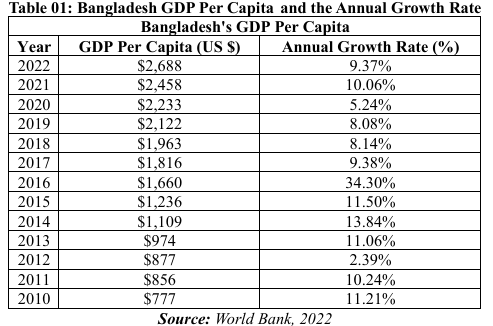
Table 01 shows the GDP per capita of Bangladesh for the years 2010 to 2022, as well as the annual growth rate of GDP per capita for each year. This study reveals that GDP per capita has been increasing steadily over the past decade, with an average annual growth rate of 7.5%. In 2010, the GDP per capita was $777. By 2022, it had reached $2,688. The annual growth rate of GDP per capita was highest in 2016, at 34.30%. The lowest annual growth rate of GDP per capita was in 2012, at 2.39%. F
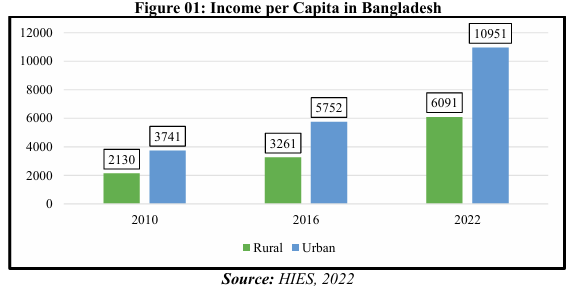
Figure 01 reveals the data about the income per capita in Bangladesh. The average monthly per capita income in Bangladesh has been steadily increasing over the past decade. In 2022, the average monthly per capita income in rural areas was Tk. 6,091 while in urban areas it was Tk. 10,951. This represents a significant increase from 2010 when the average monthly per capita income in rural areas was Tk. 2,130 and in urban areas it was Tk. 3,741. In 2016, the average monthly per capita income in rural areas was Tk. 3,261 and in urban areas it was Tk. 5,752. This figure suggests that the Bangladeshi economy is growing and that the standard of living is improving for both rural and urban residents. However, there is still a significant gap between the incomes of rural and urban residents. F
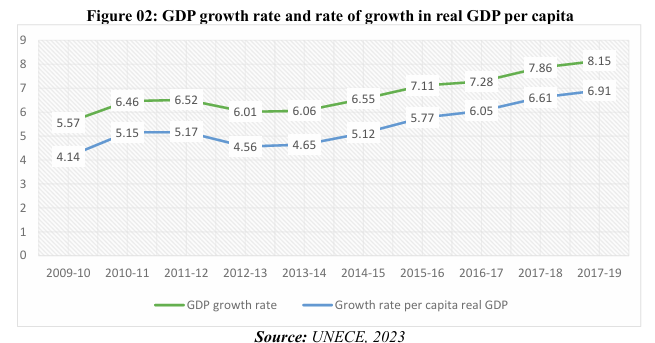
Figure 2 depicts the GDP growth rate from 2009 to 2019 as well as the rate of growth in real GDP per capita. In 2009-10, the rate was 5.57; in 2010-11, it was 6.46; in 2011-12, it was 6.52; in 2012 13, it was 6.01; in 2013-14, it was 6.06; in 2014-15, it was 6.55; in 2015-16, it was 7.11; in 2016 17, it was 7.28; in 2017-18, it was 7.86; and in 2017-19, it was 8.15. Compared to 2009, the real GDP per capita growth rate has increased dramatically. F
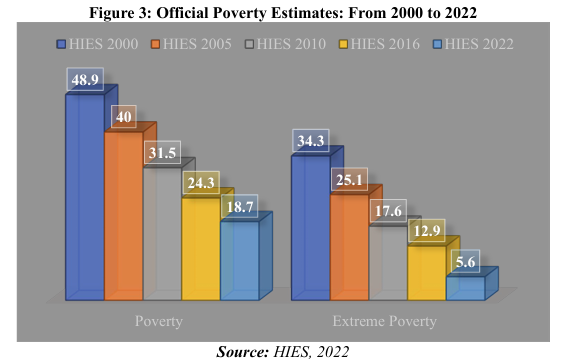
From 2000 to 2019, Figure 3 shows the progressive fall in poverty and extreme poverty. The rates of severe poverty and poverty were 48.9 and 34.3, respectively, in 2000; 40 and 25.1 in 2005; 31.5 and 17.6 in 2010; 24.3 and 12.9 in 2016; and 18.7 and 5.6 in 2022. The results showed that the nation's poverty rate has decreased. The prevalence of severe poverty had decreased as well. This trend is up-and-coming for the future of Bangladesh, demonstrating that the government's efforts to reduce poverty have been practical.
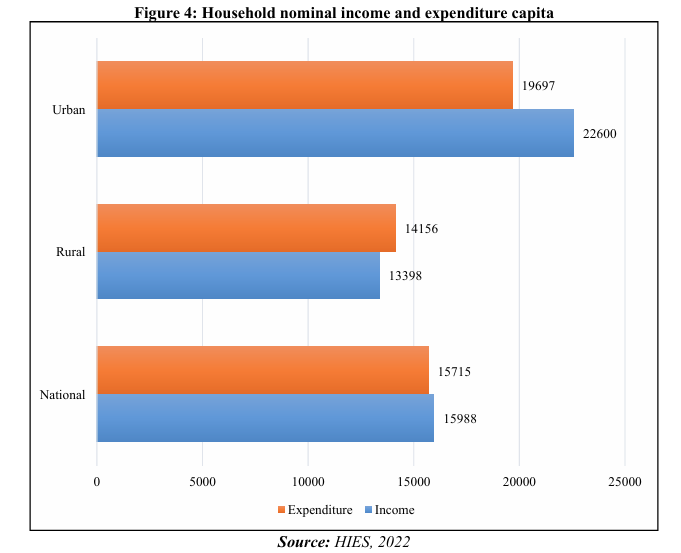
Figure 04 portrays a relatively small difference in nominal household income and expenditure nationally. Nevertheless, nominal household income exceeds nominal household spending in urban regions. However, the nominal household expenditure exceeds household income in rural areas, which implies that urban households have some financial cushion that can be used during times of hardship, while rural households often need to borrow funds to make ends meet, which indicates the unequal distribution of wealth between rural and urban households, with rural households lacking the resources to maintain their standard of living without borrowing. While the overall difference in income and expenditure is not massive, this disparity between rural and urban households is real and should be addressed.
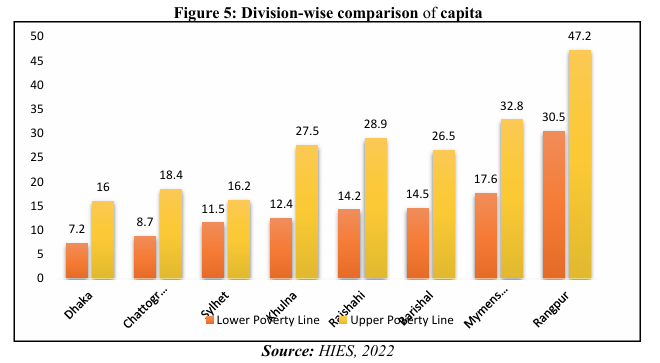
Figure 05 shows the division-wise comparison between the lower and upper poverty lines in 2016. According to this bar graph, the Rangpur division has the highest lower and upper poverty rates, with 30.5% and 47.2%, respectively. Conversely, the Dhaka division has the lowest poverty rate, with a 7.2% lower poverty rate and a 16.0% upper poverty rate.
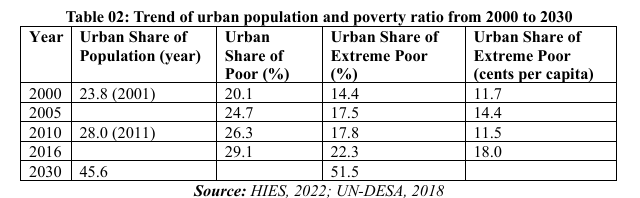
Bangladesh’s urban areas and urban population have been proliferating. Since independence, the urban population of Bangladesh has grown at an average annual rate of nearly 6%, while the national population growth rate was about 2.2% at that time. 33 The growth of the urban population is imbalanced between different sub-cities, and more than 60% of the Bangladeshi urban population is mainly concentrated in four big cities: Dhaka, Chittagong, Khulna, and Rajshahi. One-fifth of low-income families live in the cities of Bangladesh, and more urban families are eager to become middle class. In urban areas, especially in big cities, poverty reduction has slowed down. Therefore, the number of people living in extreme poverty in Bangladeshi cities is 3.7 million, about 700,000 more than in 2010. According to the current speed of urbanization and poverty reduction, by 2030, more than half of low-income families will live in urban areas.
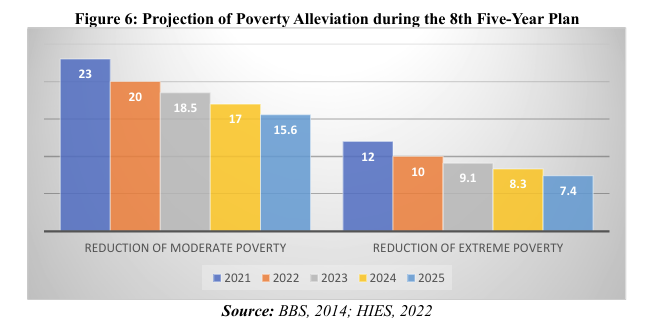
According to GED's 8th Five-Year Plan, poverty is expected to be reduced to 15.6 percent by 2025 based on the upper poverty rate and 7.40 percent on the extreme poverty rate. The graph displays the projected poverty rate throughout the 8th Five-Year Plan. The chart shows that the projected poverty rate steadily decreased throughout the 8th Five-Year Plan. The goal of the 8th Five-Year Plan is to reduce poverty and increase economic growth by promoting the efficient use of resources and increasing production. It is clear that the 8th Five-Year Plan has a specific goal in mind, and this goal can be achieved by making sure that the resources used are efficiently allocated to ensure economic growth.
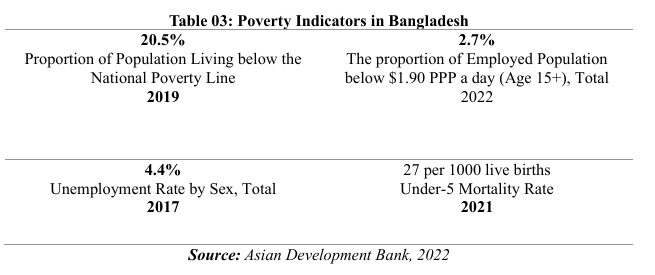
In 2019, 20.5% of Bangladesh's inhabitants lived below the national poverty level. In Bangladesh, the fraction of the employed population earning less than $1.90 per day in 2021 was 4.0%. In 2020, 29 new-borns in Bangladesh died before age five for every 1,000 births. Bangladesh has been suffering from extreme poverty for the last few decades. Bangladesh has achieved impressive progress in alleviating poverty in the past decade, and the government of Bangladesh has taken numerous steps to fight against poverty. The poverty rate for Bangladesh in 2016 was 24.3%, which is about 101% less than the year 2000, and the extreme poverty rate for 2016 was 12.9%, 165% lower than in 2000. This significant poverty reduction is a result of the Bangladesh government's commitment to fighting poverty and working to improve the economic situation of its citizens. In addition to the government's efforts, nongovernmental organizations (NGOs) have contributed to Bangladesh's poverty reduction success. The World Bank invested $1.66 billion in current energy sector operations to boost capacity, create clean energy, enhance transmission and system operation, eliminate technical losses, and promote grid and renewable electricity access. Building on Bangladesh's remarkable achievements to date—in substantially reducing poverty, improving health results and educational attainment, energizing girls and women, and establishing the foundations of a labor-intensive export-oriented financial system capable of supporting further improvements shortly—the World Bank will proceed to work with this vibrant and adaptable country to decrease poverty and offer affluence to all Bangladeshis, particularly the poor.
| Name of Organization/ Project/Program | Poverty Reduction Activities |
|---|---|
| Projection of poverty in 7th FYP | In the 7th Five-Year Plan (2016-2020) poverty rate has been projected to reduce to 18.6 percent (on the basis of upper poverty rate) and 8.9 percent on the basis of the upper poverty rate. |
| Sustainable Development Goals (SDGs) and Bangladesh | After the completion of the tenure of Millennium Development Goals (MDGs), the United Nations has declared Sustainable Development Goals (SDGs). Like MDGs, SDGs are also 15 years of target-based goals. The tenure of SDGs is 2016-2030. There are 17 goals and 169 targets in SDGs. |
| Social Safety-Net | The Government has been continuing the social safety net programs in order to alleviate poverty through the improvement of the socio-economic condition of the ultra-poor. The Government has adopted the life cycle approach of social safety net. In FY2016-17 an amount of Tk.40,857 crores have been allocated against social safety net programs. The allocation is 12.88 percent of the budget and 2.09 percent of GDP of the same fiscal year. |
| Cash Transfer under Social Safety-net Programs | A total of Tk.23,603.50 crore has been allocated for cash transfer (special and various allowances) programs, social empowerment, and some other activities. |
| Old-Age Allowance Program | The Government started this program in FY1997-98. The Ministry of Social Welfare is responsible for implementing this program. Tk.1,890 crores have been allocated under this program in FY2016-17. In total, 31.5 lakh older people receive this monthly allowance at a rate of Tk.500. |
| Honorarium Program for Freedom Fighters | This program is being implemented to show due respect to the freedom fighters. Tk.2,196.06 crores was assigned for 1.85 lakh freedom fighters in FY2016-17. Presently, a freedom fighter gets Tk.10,000 per month. Moreover, the Government also increases the honorarium of the freedom fighter. Currently, the Government provides Tk.30,000 to the Birshrestha, Tk.25,000 to Biruttom,20,000 to the Birbikram, and Tk.15 000 to the Birprotik per month as honorarium. |
| Allowance and Education for the Physically Challenged Insolvent Citizens | The Ministry of Social Welfare is carrying out this social wellbeing program intending to provide allowances continually to the physically challenged insolvent citizens; for FY2016-17, the program has received an allocation of Tk.540.00 crore. During this year, a total number of 7.5 lakh people benefited from this program. Earlier, each person with a disability got Tk.500 as a monthly allowance. This year it has been increased to Tk.600. Apart from this, the Government has allotted an amount of Tk.47.88 crore in FY2016-17 for a stipend for disabled students. In total, 0.80 lakh students would benefit from this stipend program. |
| Disabled Service and Health Centre (One Stop Service) | This year it has increased to 3.07 lakh. Similarly, the allocation has also been increased almost three times. In FY2015-16, the allocated amount was Tk.18.00 crore which increased to Tk.52.43 crore in FY2016-17. |
| Autism | A trust called the 'Neuro-Development Disabled Protection Trust' has been formed. In FY2016-17, an allocation amounting to Tk.10.50 crore was made to carry out the trust's activities. Ten Special Schools for Children with Autism have been set up under 'National Disabled Foundation'. These schools are continuing their academic activities through unique/distinctive methods. |
| Orphan Rationing Allowance | The Ministry of Social Welfare has been playing an administrative role in carrying out this program. It is being implemented to help orphans so that they can lead secure and hunger-free lives. An amount of Tk.46.24 crore has been allocated for this program in FY2016-17. |
| Maternity Allowance for Poor Mother | This program gives allowance facilities and arranges different types of awareness-building training related to health and nutrition issues. In FY2016-17, a total of Tk.300.00 crore was allocated for 600 lakh mothers at a monthly rate of Tk.500. |
| Vulnerable Group Development (VGD) Program | An amount of Tk.1, 191.85 crores has been allocated under this program. It is expected that around 3.15 lakh MT of food and grain can be distributed among the beneficiaries by utilizing this amount. |
| Rural Infrastructure Maintenance (Test Relief) Program | The Ministry of Disaster Management and Relief performs the TR program. In FY2016-17, the Government allocated a total amount of Tk.1, 281.32 crores to this program. |
| Projects under the Social Empowerment | Eighty-three projects/ programs were implemented in FY2016-17 under the social empowerment sector. Tk.9, 491.97 crores is allotted in FY2016-17 to continue implementing these programs/ projects. |
| Ekti Bari Ekti Khamar | The Government has been conducting the Ekti Bari Ekti Khamar (One House One Farm) Project to turn each rural household into acentre of economic activities. Up to 30 June 2017, almost 2.9 million families belonging to 55,786 Village Development Organizations (VDOs) have been covered with an integrated capital of Tk.35,84.1 crore. Of that, Tk.1 142 crore is beneficiaries' savings, and the government grant is Tk.34, 698.1 crores. |
| Bangladesh Rural Development Board (BRDB) | crores. Bangladesh Rural Development Board (BRDB) Bangladesh Rural Development Board (BRDB) has made a noticeable contribution to the development efforts, i.e. poverty decline in Bangladesh. BRDB has successfully implemented 114 projects/ programs. It also has other services such as health, family planning, sanitation, education, HIV/AIDS prevention, information and technology, and environmental development. |
| Palli Daridro Bimochon Foundation (PDBF) | Palli Daridro Bimochon Foundation (PDBF) was formed in 1999. It has been implementing its programs in the 403 offices of 359 upazilas under the 52 districts. These areas cover two-thirds of Bangladesh which is recognized as the most vulnerable area of the country. Among the beneficiaries, 95 percent are female. Since June 2017, PDBF has distributed a total of Tk.10 827 crore microcredit and small enterprise loan. |
| Small Farmers Development Foundation (SFDF) | Up to June 2017, Tk.578.81 crore has been disbursed as collateral-free microcredit among the foundation members. This amount has been used for agriculture production, self employment and income-generating activities. At the same time, Tk.471.27 crore has been recovered. The foundation members' small weekly savings have accumulated Tk.42.85 crore as their capital until June 2017. |
| Karmasangsthan Bank | The Karmasangsthan Bank was established in 1998 to create self employment opportunities for unemployed youths. Currently, the bank operates its services through 237 branches across the country. Up to June 2017, a total of Tk.3, 450.76 crores has been disbursed cumulatively among the beneficiaries. On the contrary, at the same time, Tk.3, 178.18 crores have been recovered during this period. |
| Bangladesh Academy for Rural Development (BARD) | Bangladesh Academy for Rural Development (BARD) is the pioneer in rural development in Bangladesh. BARD has undertaken 31 research, out of which 11 were completed in FY2016-17. It has also initiated a 'Research and Higher Study Fellowship' to promote social research on the country's recent problems. Moreover, BARD has implemented six action research projects during FY 2016- 17. During the same period, the Academy conducted 137 national and international training courses and workshops. |
| Palli Karma Sahayak Foundation (PKSF) | Palli Karma-Sahayak Foundation (PKSF) has contributed significantly to poverty alleviation. PKSF is working as an implementing partner of the 'Skills for Employment Investment Programme (SEIP)', whose aim is to develop a skilled workforce and generate employment at home and abroad. |
| Society for Social Services (SSS) | Currently, SSS works in the 182 upazilas of 31 districts. Up to June 2017, a total of Tk.12 803 crores has been disbursed, and at the same time, Tk. Eleven thousand two hundred ninety-seven crores have been recovered. |
| BRAC | BRAC, the largest NGO in the world, has dramatically contributed to Bangladesh's socio-economic development. Up to February 2017, BRAC disbursed an amount of Tk.1, 40,402 crores. During this period, in total 59, 57,951 people have benefited, out of which 87 percent are female. |
| Grameen Bank | Grameen Bank provides different services to address the diverse needs of people experiencing poverty. Up to June 2017, the bank cumulatively disbursed Tk.1, 53,124.48 crores. On the other hand, an amount of Tk.1, 39,666.60 was recovered during this period. |
Source: Ministry of Finance, 2023; Mohiuddin, 2022
|
|
In 2019, 20.5% of Bangladesh's inhabitants lived below the national poverty level. In Bangladesh, the fraction of the employed population earning less than $1.90 per day in 2021 was 4.0%. In 2020, 29 new-borns in Bangladesh died before age five for every 1,000 births. Bangladesh has been suffering from extreme poverty for the last few decades. Bangladesh has achieved impressive progress in alleviating poverty in the past decade, and the government of Bangladesh has taken numerous steps to fight against poverty. The poverty rate for Bangladesh in 2016 was 24.3%, which is about 101% less than the year 2000, and the extreme poverty rate for 2016 was 12.9%, 165% lower than in 2000. This significant poverty reduction is a result of the Bangladesh government's commitment to fighting poverty and working to improve the economic situation of its citizens. In addition to the government's efforts, nongovernmental organizations (NGOs) have contributed to Bangladesh's poverty reduction success. The World Bank invested $1.66 billion in current energy sector operations to boost capacity, create clean energy, enhance transmission and system operation, eliminate technical losses, and promote grid and renewable electricity access. Building on Bangladesh's remarkable achievements to date—in substantially reducing poverty, improving health results and educational attainment, energizing girls and women, and establishing the foundations of a labor-intensive export-oriented financial system capable of supporting further improvements shortly—the World Bank will proceed to work with this vibrant and adaptable country to decrease poverty and offer affluence to all Bangladeshis, particularly the poor.
Past strategies and programs
Traditionally, Bangladesh's development goals aim to boost national prosperity while alleviating
poverty. The proposals, however, exclusively addressed the very poor through short-term social
protection efforts. The programs expected that economic development and conventional poverty
programming would assist the extremely poor. Despite intentions to provide room for rural
development, neoliberal policies alienated the poor. Due to mismanagement, most of the country's
development money in social welfare went unutilized. The World Bank and International
Monetary Fund (IMF) Poverty Reduction Strategy Papers (PRSP) steered Bangladesh's growth
beginning in 1999. These programs, too, urged for social protection but did not propose a
fundamental approach to assist the most vulnerable. There needed to be more cooperation among
the numerous groups involved in policy preparation.
Furthermore, poor research conduct and dissemination hampered informed decision-making and
the creation of forward-thinking policies. Lastly, the plans seldom included a preventative
mechanism; somewhat, issues were ignored till they reached epidemic proportions. Questions
about the relevancy of these initiatives arose, such as whether the government needs these
programs and, if so, how much money should be spent on them. Second, what was their goal?
Who were these initiatives aimed at, and what did they expect to accomplish? Should social
protection programs provide a safety net or try to help the very poor? Concerns were expressed
in program execution due to the programs' heterogeneous and disaggregated structure. Programs
also had major targeting issues. Decentralized targeting allowed local elected officials to
distribute services through patronage networks or in exchange for incentives. Food aid programs
were likewise plagued by leaks and inefficiencies in management, resulting in just a tiny fraction
of payments reaching users.
Existing strategies, policies, and programs
Poverty eradication had been a fundamental component of the AL government's national plan in
2008, with a specific emphasis on very vulnerable communities. They also took several steps to
create transparent and inclusive decision-making procedures for poverty programming.
Bangladesh, for example, has a history of secretive budget processes that have served to safeguard
diverse interest groups. However, national-level conversations and workshops have recently
gained more media prominence. Projects under several ministries of the Bangladeshi government
are currently addressing the needs of specific, impoverished populations.
Nevertheless, because many programs are disaggregated, monitoring targeted beneficiaries is,
who receives what—and the success of targeting approaches is challenging. Support for highly
impoverished populations was primarily found through the social welfare ministry. The ministry
offered various needy populations stipends, jobs, and food assistance. Meanwhile, stakeholders
highlighted several concerns about social assistance programs. The female-male school enrolment
ratio increased from 35:65 in 2009 to 53:47 in 2017. Enrolment in pre-primary and elementary
schools increased to 99%. Female education has dramatically reduced the rate of child marriage
(Ministry of Foreign Affairs, 2021). Over the last decade, our poverty rate has dropped from
31.5% to 20.5%, and our per capita income has more than tripled. The infant mortality rate was
lowered to 23.67 per 1,000 live births, the maternal death rate was reduced to 173 per 100,000
live births, and life expectancy increased to 73 years.
Non-government development activities
Non-governmental organizations target the extreme poor in four ways: as part of donor initiatives for the Millennium Development Goals, (ii) through asset shift or asset transfer-plus programs, (iii) through microfinance and microfinance-plus programs, and (iv) through research and advocacy. With a focus on MDG1, eliminating extreme poverty and hunger, several government partners addressed severe poverty in their countries through various initiatives. Donors created asset transfer programs for poor rural people who did not qualify for microfinance. They gave selected beneficiaries an asset and various services to assist them in building an asset base. Larger assistance packages, precise targeting, and careful monitoring were all elements that contributed to successful asset transfer programs' high graduation rates. Some stakeholders questioned the program's potential to permanently pull the extremely poor out of poverty. Several organizations launched customized microfinance programs for the underprivileged. However, the high costs of asset transfer and microfinance for the extremely poor put the long-term viability of these programs in jeopardy. This study analyzed news coverage of severe poverty issues to determine the level of advocacy. Although the English daily, The Daily Star, offered severe poverty-related items the most attention with maximum front-page coverage, Bengali publications showed a more vital willingness to publish them (16.15 percent of their coverage of extreme poverty). Newspapers covered ultra-poor concerns on various topics, with economic, social, and social welfare issues garnering the most attention.
Conclusion
The journey of Bangladesh towards reducing poverty reflects a significant detail of resilience,
innovation, and collective efforts. Over the past few decades, the nation has shifted to significant
economic growth from widespread poverty and achieving advanced social indicators. Target
interferences such as microfinance programs, social security nets, and rural infrastructure
development have empowered millions, especially in marginal and poor communities. These
initiatives, combined with strategic international cooperation, have made significant contributions
to poverty alleviation and economic progress. Despite these successes, the fight against poverty
in Bangladesh remains far away. Extreme challenges with unequal access to necessary services
such as economic discrimination, regional discrimination, climate change weakness, and health
care and unequal access to sustainable development continue to sustain sustainable development.
At the centre of Bangladesh's progress is the resilience of its people, whose determination and
skills have transformed the socio-economic landscapes. The farmers who take sustainable
practices are complementary to the institutional efforts of separate and collective steps from
women participating in microfinance initiatives. These adjustments between the grassroots
movements and the policy structure emphasize the importance of inclusive growth and
community-driven solutions. The country can facilitate more inclusive and sustainable growth by
integrating resources, enhancing institutional skills, and integrating climate elasticity
development strategies. The progress made so far is proof of what can be achieved when
government, community, and international institutions come together for a general purpose,
which is related to the institutional theory related to this study of poverty reduction. With
sustainable commitment innovative methods, and better institutional approaches, Bangladesh is
in a good position to become a model of poverty alleviation in the Global South, inspiring similar
transitions to other developing countries.
Ultimately, the path to eradication of poverty is a continuous process that requires adapted
techniques, collaborative governance, institutional unity, and firm determination. Bangladesh can
not only overcome its remaining challenges by addressing the main reasons, strengthening
institutions, and promoting inclusion, but it can also ensure that its growth benefits every citizen,
creating a society that is not only prosperous but also equitable and resilient.
Recommendations
To sustain and enhance poverty alleviation efforts, the following recommendations are proposed in this study:
By adopting and implementing these strategies, Bangladesh can transform its poverty reduction efforts into more sustainable, inclusive, and resilient development models. This extensive method will not only enhance the well-being of its citizens but also position the country as a global example of effective poverty reduction.
Corresponding Author. E-mail: islamreaz8919@gmail.com